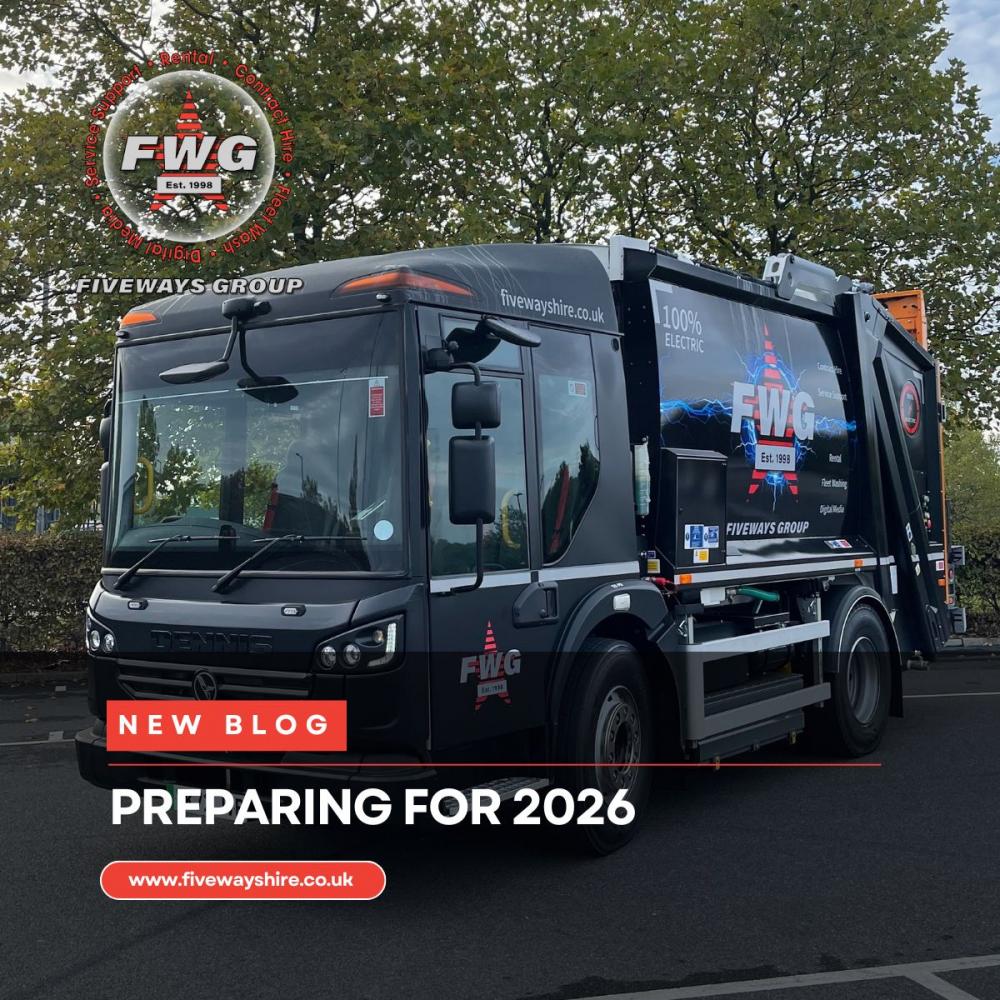
Preparing for 2026: Key Changes Shaping Waste Management
2026 is shaping up to be a year where several long-discussed shifts move into everyday reality.
For local authorities, contractors and waste operators, the challenge will be less about reacting to individual changes and more about managing how they intersect.
Telematics and Artificial Intelligence (AI)
Telematics has become part of the operational baseline for many fleets. Vehicle data is increasingly used to support route efficiency, identify maintenance needs earlier, and to strengthen compliance reporting.
AI is transforming these systems, helping to analyse large volumes of information more quickly and identify patterns that may not be immediately obvious. For experienced operators, AI does not replace operational judgement, it supports it.
As expectations grow, vehicles entering service in 2026 will increasingly need to be telematics ready, with systems that integrate smoothly into existing platforms. However, the fundamentals remain unchanged: reliable vehicles, strong maintenance plans, and experienced teams are still the foundation for any data led decision-making.
Digital Waste Tracking and Transfer Notes
Alongside vehicle data, waste data itself is becoming more tightly regulated. The move towards Digital Waste Tracking and Transfer Notes represents a significant shift in how waste movements are recorded and audited.
In practice, this introduces new operational considerations for both operators and fleet providers. Accurate data capture, system compatibility and staff training will be critical for compliance without slowing service delivery.
For fleet operators, this means vehicles and crews increasingly operate as part of a wider digital reporting chain. For many organisations, the challenge will not be the technology itself, but ensuring that systems, processes and partners align.
Simpler Recycling
Simpler Recycling continues to move closer to full implementation, and by March 2026 its operational impact will be difficult to ignore. While the policy aims for consistency, the transition will place pressure on fleets, particularly around food waste collections and increased vehicle demand.
At the same time, Wales continues to operate under a different framework, with separate requirements and timelines. For operators working across the two, it adds another layer of processes and reporting to adapt to multiple regulations at the same time.
The practical challenge for many operators will be managing this transition without overcommitting to permanent fleet expansion before services are fully stable. Temporary capacity gaps, route redesigns, and increased resident communication requirements are all likely to be a part of this.
For many organisations, flexibility will be key. Short term vehicle solutions and contingency planning will help bridge the gap between policy changes and operational reality.
Events, Peak Demand and Capacity Planning
Public events, festivals and seasonal surges are placing increasing pressure on waste collection fleets. Expectations for uninterrupted service are increasing, even during periods of high demand. Forward planning and access to additional capacity when needed will continue to play an important role.
Lessons learned from recent years show that flexibility is often the difference between maintaining service levels and struggling to respond under pressure.
Road Safety and Vehicle Visibility
Safety standards continue to rise, with vehicle visibility and pedestrian protection in focus. Direct Vision Standards, enhanced camera systems and audible warnings are now expected rather than optional.
Beyond compliance, safety has become a reputational issue. Vehicles that are clearly specified, well maintained and operated responsibly reflect directly on the organisations running them.
As 2026 approaches, operators will need to ensure that safety considerations are embedded into fleet planning and maintenance schedules, not treated as an afterthought.
Industry Pressures and Workforce Challenges
Alongside regulatory and operational change, workforce pressures remain a challenge. Shortages and driver availability continue to influence how fleets are managed.
In this environment, long term partnerships are becoming more valuable than transactional supply. Operators rely on trusted providers who understand their pressures and can support consistently during peak periods or unexpected disruption.
What This Means for 2026
Together, these changes point towards a sector where preparation will matter more. Fleet Operators that plan early, build flexibility into their operations and focus on preventative maintenance, will be better equipped for managing complexity.
Technology and regulation will all play a role, but experience and strong partnerships will always be essential for keeping services moving.
This year, the question for many operators is not whether change is coming, but how ready they are to manage it.